
3 Ways a Modern, Cloud ERP Can Help Reduce Costs
Subscribe

With their advanced capabilities and rich feature sets, ERPs for higher education can help institutions better recruit and retain students.

Institutions stretched thin should look to ERPs designed specifically for higher ed to help maximize the value of their resources.
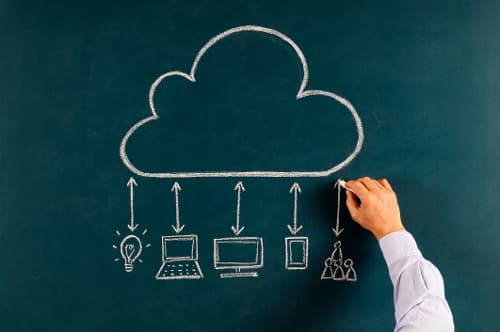
Higher education institutions see the potential of the cloud but seem hesitant. Let’s break down how the cloud can impact institutions.

The role of the CFO is evolving. They are increasingly responsible for aggregating campus-wide data and translating complex information for stakeholders.

Higher education institutions embarking on a digital transformation may recognize the digital campus as the endgame.

An institution’s student information system should seamlessly integrate with digital systems on campus to improve efficiency and student experiences.

A cloud-based student information system can help an institution be more resilient and flexible to change.

Higher education ERP systems should deliver the security, integration, functional, and user-friendly capabilities that institutions need in today’s unpredictable environment.

Higher education institutions can take some notes from enterprise cloud transformation programs, which are underway and can spur the industry’s cloud adoption.

Eliminating silos and integrating systems across campus will give institutions a better chance to attract and retain students and deliver better experiences.

With 2020 underway, it’s important for institutions to align IT strategies align with overall objectives, embrace new methodologies, standardize processes, and take a stronger security stance.

Several technology trends will emerge or accelerate in 2020, including cloud, analytics, AI, blockchain and more.

Higher education enterprise resource planning (ERP) systems are changing thanks to the unification with student information systems and the evolution of the cloud.